
Independent Bookselling for Independent Minds


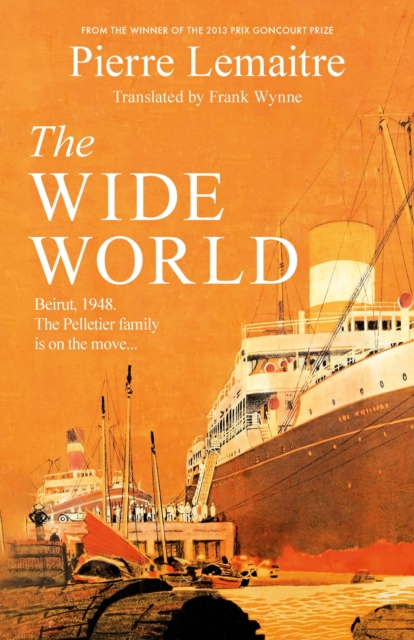
This is a thriller, the first in a trilogy, which is so hugely ambitious in breadth and delivers so much, that it’s difficult to describe in only a few words. We first meet the Pelletier family in 1948 in Beirut, but we are quickly taken to the extremes of a vibrant, somewhat lawless Saigon during the Indochina war and to Paris, much damaged but hopeful with peace. The characters, the family dynamics and the locations are all well drawn, but it is perhaps the multi-layered, highly dynamic plot lines that steal the show. Lemaitre is on sparkling form here in this whirlwind of a family saga laced with murder and corruption.
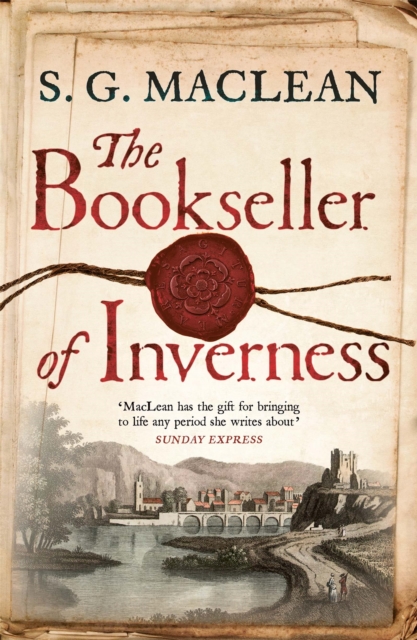
This is an excellent historical crime novel; a tightly constructed plot with twists that are anchored in accurate historical details and like any good historical novel it informs and sparks your curiosity to know more about that period. Set six years after the Battle of Culloden, Iain MacGillivray is grappling with the guilt of surviving the fighting and turns to his bookshop for solace. Yet, when a man is found dead wearing the Jacobite emblem, he’s faced with unsettled rivalries, dangerous politics and questioning loyalties. The sense of threat and atmosphere positively ooze from the page as MacLean emphatically captures the tensions and mistrust between clans after the atrocities.

I impulsively chose to read this between a couple of book group titles, and I’m so pleased I did. As the pandemic hits and dramatically changes our lives, political advisor, Chloe Dalton finds herself unexpectedly raising a vulnerable leveret. For centuries, the hare has fascinated us, yet despite that, we know very little about this mysterious creature. Dalton revels in learning this animal’s habits, observing with a gentleness and curiosity matching the leveret’s own endless inquisitiveness. Written in beautiful, soothing prose, delicately witnessed moments of a rare co-existence are perceptively captured in this intimate account that highlights the warmth and hope that so often come from the natural world.

I’ve never read a novel that has so much suspense! This compelling read is inspired by events in Rome in 1943 when the city is occupied by Nazi forces headed by a notoriously ruthless SS officer. The novel centres on Hugh O’Flaherty, an Irish priest living in the Vatican and a small choir he forms as a cover for the group’s activity in establishing an Escape Line. O’Connor uses a particularly clever writing structure to unveil events leading up to a Christmas Eve mission - as a reader, your heart is in your mouth, you’re utterly invested in the characters’ survival and everything that’s on your to-do list will just have to wait.

I’d not heard of this author until she won this year’s Women’s Prize for Fiction, and what a discovery. This novel generated an excellent book group discussion, shining a spotlight on the atrocities of the civil war in Sri Lanka. Brotherless Night tells one family’s story set against the greater scale of a country and its political troubles and in doing so, enables readers to see the war through different and opposing lenses. The voice of the main character, Sashi, is exceptional, and the author has brilliantly woven real-life characters into the narrative, their storylines authenticating the danger faced by people on all sides. Yet the writing is compassionate, demonstrating the importance of human connection in the hope for survival and a better future.

Taking you on a joyous journey through the seasons, The Herbal Year is replete with fabulous illustrations guiding you through the herbal uses, ancient and modern, of a wonderful selection of common plants. With facts aplenty and engaging writing, there is much here to enjoy for both the layman and the enthusiast.

This book could be described as being about gaming, but really it is a moving, intricate story of friendship, creativity and resilience that hugely opened my eyes to appreciate the gaming medium and its creative storytelling. Zevin has crafted a vivid world that captures the highs and lows of artistic ambition and love. In the 90s, a time that seemed so full of possibility, Sam is reunited with his childhood friend and the pair are launched into a creative project which could make them famous. Then overnight, still in their early 20s, the world becomes theirs, testing their relationship. Utterly brilliant!

A sweeping collage of northeast history, framed by the life (or more accurately, the death) of the illustrious yet humble Saint Cuthbert. Bold in both style and concept, the complex narrative takes the reader on a journey from the peregrinations of Cuthbert’s coffin to its final resting place (in what will become Durham Cathedral), right through to the present day. The histories and characters woven through the intervening centuries are original, beautifully realised and often extremely moving. This book was an absolute highlight of my reading year, and I guarantee you’ll find yourself marvelling at its linguistic virtuosity while it simultaneously steals your heart.

Feeling a sense of wanderlust and out of touch with his fellow Americans, Steinbeck embarks on an investigation of America, his purpose: to listen and understand localness. The account of his travels is prophetic, philosophical, and above all, human. It offers a snapshot of America in 1960, celebrating social interactions, the serendipity of journeys and the unknown in the everyday. His honest practical approach keeps his romantism for the past in check, couching nostalgia in the reality of the era. His observations describe the complexities of this diverse nation; at times troubled, deeply personal, yet generous and hopeful, Steinbeck writes with such a refreshing ease - a privilege to be in the hands of such a prodigiously talented writer.

This is a brilliant debut set in an old manor house beside the sea. We arrive at Chilcombe on New Years Eve 1919 and when we leave in May 1945, there has been a great deal of change for both its inhabitants and the whole world. Throughout, the house stands solid offering familiarity and stability in uncertain times. It is home to three eccentric siblings, who share a childhood full of play and adventure rather than the same genetic biology. Bonded by their isolation and imagination, this is a book founded on their stories. With echoes of Elizabeth Jane Howard’s Cazalets series, this is a novel with a big stage and cast. It draws you in with charm and heart, navigating social mores with grit and ambition. It is such a wonderful book to spend time with, I felt bereft after I turned the last page.

Prepare to be transported to sixteenth century Florence, awash with institutional corruption and personal intrigue, at the centre of which is Cesare Aldo; soldier and officer of the criminal court, struggling to hold on to his life and integrity, as he’s tasked with investigating a politically sensitive murder. The plot is wonderfully labyrinthine (as befits its setting) and Aldo a charismatic yet flawed central protagonist, as he attempts to navigate the murky moral waters of Medici Florence, never without his trusty stiletto tucked into his boot.

This engrossing book is a travelogue with a difference; perfect for those of us who love to contemplate the stories behind ancient ruins, abandoned buildings and mysterious shapes in the landscape. Matthew Green tours Britain from the Neolithic settlement of Skara Brae in Orkney, to the remnants of medieval Winchelsea on the Sussex coast, exploring how and why these locations rose, fell and left tantalising traces for us to wonder at. It’s both astonishing and inspiring to realise there’s so much left for us to discover in these ‘shadowlands’: whether blighted by natural phenomena, disease or political change, there’s a fascinating tale behind them all.

Full of interest, insight and wonderful research, this book brings an incredibly fresh perspective to the study of poverty in nineteenth century London. Oskar Jensen has eschewed the ‘top down’ approach to his study and instead concentrates on the stories of individual ingenuity, endurance, success and failure amidst the capital’s poor. He cleverly ranges across age and gender to highlight particular issues faced and writes brilliantly about the complex psychological and prejudicial interactions between the perceived ‘lower’ classes and those they encounter. In its examination of the ‘othering’ so often at the heart of social injustice, this is a book which still resonates hugely with us today.

The author’s exquisite writing seems particularly suited to this delve into the fragmentary, quasi-mythical realms of the post-Roman world. Williams deliberately ignores the early medieval kingdoms which prospered and goes in search of the smaller often more vulnerable ones, which existed for a time and then disappeared or were subsumed – their individual identities lost to posterity. This book is a testament to the author’s love of his subject, to ever evolving archaeology, to what might have been and also to honesty; Williams is the first to admit that sometimes it’s impossible to know the extent and character of these regions when the past is so very distant.

This is an intimate depiction of the Erradale Valley where Annie Worsley lives in Red River Croft. Annie’s writing is a joy to read, soothing and thoughtful about the world around her and considerate of her own presence in this varied landscape. As she explores this special place, from its geological history and topography, to the wonders and graft of crofting, her connections with nature and exquisite observations embody the movement and rhythms of the land, sea and air. Annie’s rich descriptions of nature through the seasons opened my eyes to a vast spectrum of colours, with subtleties of palette that I hadn’t registered before; her compositions engage all of your senses.

No matter how much I read about Antarctic exploration it’s a subject I find endlessly compelling, and Julian Sancton’s book illustrates exactly why. It follows a Belgian expedition – setting out in 1897 and containing amongst its crew a young Roald Amundsen – which became trapped in the ice and was forced to overwinter on this most terrifying of continents. The manner in which the captain and crew dealt with physical and mental health issues, morale, food supply and – most importantly – preventing their ship, the Belgica from being crushed by the ice, is a phenomenally interesting story, full of strangeness and wonder. The incredible ingenuity and the terrible darkness of humanity is on thrilling display throughout.

This is a stunningly ambitious and brilliantly executed hybrid of crime and literary fiction. Set in Colorado in the small town of Whistling Ridge, it’s a brutally convincing examination of abusive power, corruption, prejudice and domestic dysfunctionality, rendered in prose of elegance and emotional power. When teenager Abi Blake goes missing after a party in the woods, the subsequent efforts to discover her whereabouts bring a myriad of toxic secrets to light, threatening to expose the hypocrisy of one generation and poison the future of the next. Although not always a comfortable read, this book expertly cracks the veneer holding a community together while still holding out hope of redemption.

This is a compelling and engaging account of one family’s unflinching determination and endurance to survive the atrocities and desperate suffering that plagued Vietnam over decades. Told in the first person from both Huong and her grandmother, the storytelling has an immediacy and familiarity, and I found the rhythm of the writing and voices strangely consoling in the face of the brutality and hardship the pair face. The unveiling of one family’s story is set against the wider back drop of the history and politics of this country’s conflicts and through it all there is the incredible integrity, resilience and hope of the human spirit.

I adored this historical novel, not least because the author’s vivid depiction of nineteenth century Edinburgh is a shining delight throughout. But this is far from the book’s only source of joy. Set in 1822, its central narrative involves the relocation of the city’s Botanical Gardens from their original site in Leith to their (still current) site on Inverleith Row. Against this backdrop the author’s central characters Elizabeth, a young widow traumatised by a violent marriage and Belle, a courtesan determined to maintain her independence at all costs, form a complicated friendship wherein the author examines gender roles, class, and social hypocrisy with a keen yet humorous eye.

There is something special when you read the right book at the right moment; in 2021 this was the book for me. A compilation of accounts by a selection of inspirational women who thrive in the face of a physical challenge - certainly not always the fastest, highest or most epic, this is about individuals’ personal challenges and one’s capability to dig deep. I read it when the confines of lockdown felt at their most restrictive but within these accounts, I found hope and inspiration. Yes, we’d be outdoors again, experiencing the adrenalin of embracing playground wildernesses. I’ve been on some amazing walks this year, thanks to the motivation of these stories, I hope it leads to some great adventures for you too.

This is such a superb psychological thriller; set in Oxford and centring around an apparently successful but highly dysfunctional family with nods to gothic fiction and a wonderfully tricksy potentially unreliable narrator, it’s an utterly fabulous read. A child has disappeared, and her nanny Dee is being questioned by the police; she seems like a sympathetic character but we’re seeing everything through her eyes regarding the family’s behaviour: how far can we trust her, plausible as she seems? Lucy Atkins’ writing is just so good; she has a brilliant eye for character, and she also evokes a great sense of Oxford as a city full of ghosts and often at odds with itself.

One for the medieval historians here. Set in 1346, we follow Edward III’s army as it journeys through France, skirmishing and burning as it goes, heading towards the pivotal Battle of Crécy. Simon Merrivale, the Prince of Wales’s herald, is tasked with investigating the murder of an archer, but he soon discovers that this is not an isolated incident; he may well have stumbled upon a much wider conspiracy which could endanger his own life. With a reassuring labyrinthine plot, great characters, and wonderful historical detail in both the depictions of battle and everyday life on military campaign, this is a fantastically gripping, suspenseful read.

This is a genuine emotional roller coaster of a novel which examines the consequences which ripple out across time after a young girl is found dead outside a small Californian town. Years later, her supposed killer is released from jail and returns home; her damaged, psychologically fragile sister Star is then found dead, and the town seethes with suspicion once more. Star’s children Duchess and Robin become the focal point of the town’s attention; who will protect them as the local police struggle to find out what happened? This novel is heartbreakingly poignant as it follows the children’s journey to try and reach some kind of sanctuary, and in the teenage Duchess Day Radley, Chris Whitaker has created a complex, brave, and utterly compelling heroine.

This enthralling piece of crime fiction introduces us to one of my favourite new characters: Persis Wadia, India’s first female detective. Set in Bombay in newly independent India, we’re in a country alive with febrile tension; the new way ahead not yet clear and the scars of imperial suppression very much in evidence. Vaseem Khan skilfully weaves the story of a high-profile murder case, the roots of which are buried deep in complex political history, with Persis’s own personal family life and her burgeoning professional relationship with Scotland Yard criminologist Archie Blackfinch whose caution and deference are a perfect foil to her own pugnacious dynamism. The novel is supremely eloquent and convincing in its tackling of misogyny, corruption, and the toxic legacy of empire.

This is a wonderfully bold piece of imaginative storytelling. A novel which plunges the reader into the unforgettable world of its central character; where tides cause waves to crash through a house of infinite and strange spaces, all revealed to the reader in poignant detail as we try to work out just who and where Piranesi actually is. There’s a mystery to solve but the truth is as obscure to the novel’s central character as it is to the reader, with the curtain only slowly and tantalising being drawn aside by this supremely talented author. Clarke’s book is a subtle and beautiful look at humanity’s constant questing for something beyond ourselves, into obsessive investigation and the consequences thereof. Stunning, moving and delicately memorable.

The Dutch House is that rare thing; a beautifully written novel which has you wanting to slow down to savour each word and race to find out what happens next. The story has its genesis in events which unfold in ‘The Dutch House’ and which reverberate into the protagonists’ future. With exquisite subtlety, Ann Patchett gently uncovers the tremors which underpin many of the characters’ ostensibly functional lives – often encapsulating a lifetime of emotion in a few words. Prepare yourself for heartbreak and joy – I can’t remember when I found a novel this satisfying, or thought about it as much once I’d put it down.

This fascinating book reveals the disparate lives of five women, better known for the circumstances of their deaths. Although we may recognise their names, they have long been overshadowed by the cult of their killer, alias Jack The Ripper. Diminished in the face of sensationalism, dismissed as prostitutes and objectified as victims, I love the way that Hallie Rubenhold has reclaimed these women’s stories. Compelling, compassionate and immaculately researched, The Five resets the skewed perspective of history. Essential reading!

This is a wonderfully absorbing story set in a small rural community in Norway where, in 1880, the beauty of its surroundings is starkly contrasted with the harsh reality of desperately long, cold winters and people’s struggle for survival. Here, lifestyles and mindsets are strongly rooted in the land, but times are slowly changing, and the arrival of a new pastor calls into question the formidable position of the church. The story centres around three main characters all of whom dream of achieving their ambitions but to do so means breaking society’s restrictive conventions. Mytting’s characters have depth, his storytelling is vivid and emotionally rich, and his writing effortlessly unfolds a captivating tale.

I know less than I would like to about wild plants and fungi – certainly not enough to eat anything more adventurous than the odd blackberry. So, I expected to find The Forager’s Calendar useful and informative, which it absolutely is, with clear descriptions and excellent colour photographs. Not only a superb practical handbook, it is also full of thought-provoking insights and sparkles with John Wright’s humour. Equally fascinating on conservation, nutrition and the relationship between foraging and the law, Wright will prove the best of companions on your forays into finding food for free.

As the author sets out in his preface, the purpose of this hugely informative and entertaining book is to attempt an understanding of ‘why the North East remains one of the most distinctive parts of England’. I’m sure no native of the area would dispute this assertion, and in this vividly rendered, meticulously researched book Dan Jackson swoops and soars over crucial aspects of our region’s social, political, intellectual and industrial history. There emerges from its pages an affectionate but never sentimental portrait of a people uniquely shaped by their environment. It’s a must read for anyone interested in North East history from the Tees to the Tweed. Just wonderful.

This is an incredibly gripping debut novel by an American writer who works for the UN and currently lives in Norway with his family. The idea of uprooting oneself and trying to assimilate into another culture is a prominent theme in this interesting book.
The novel, set in Oslo, has the plot and pace of a thriller with the central character rescuing a young boy after his mother has been murdered in his apartment block. However, its overriding concern seems to be with the effect of and attitude towards conflict at individual, family and national level. The main character Sheldon Horowitz is a veteran of the Korean War, and a large part of the novel concerns his seeking what he sees as atonement for the death of his own son in the Vietnam War. Meanwhile other characters have been involved both as aggressors and victims of the more recent conflict in the Balkans. By turns moving and comic this is that quite rare thing – a genuinely thought provoking thriller.

A reimagining of the last days of the Trojan war may seem unfamiliar territory for Pat Barker, yet in this outstanding novel her towering abilities as a writer are deployed with breath taking skill. Briseis, queen of Lyrnessus, has been captured and enslaved by Achilles; forced to survive as best she can in the Greek camp. This was the fate of a great many women in Homer’s Iliad, but we know this about them and little more. Here Pat Barker conjures in brutal, harrowing detail what such a life could have been: the lack of agency and equality cruelly distorting all relationships. One of Pat Barker’s great strengths is her ability to portray the physical sensations of her characters’ experiences and this she does to brilliant effect here; we feel Briseis’ terror, anger and confusion coupled with an emerging steeliness which enables her to survive.

I loved the spare beauty of this novel which encompasses so much with so few words. The story is a deceptively simple one with the transcendent air of myth; American pioneer Cy Bellman leaves his home and family on a quest to discover a giant beast, the bones of which have allegedly been unearthed in Kentucky. While Cy follows his dreams into a land of both physical and spiritual extremes, he believes his daughter, Bess, to be safe at home living with his sister. However, by abandoning his paternal duties, has he in fact left Bess prey to threats of a different, more insidious kind? The insightful, menacing portrayals of both the unknown wilderness and the familiar domestic landscape are utterly compelling and the emotional engagement I felt with both Cy and Bess has been long lasting.

This crime novel is a mind-bending tour de force, with a plot so complex you might want to make notes as you go along. With nods to both the ‘country house’ murder of crime writing’s golden age and another to the sinister speculations of dystopian fiction, this novel has its protagonist Aiden Bishop, inhabit a variety of different host bodies in a quest to discover the murderer of Evelyn Hardcastle. But who is Bishop? Where is he? And what tricks is time playing on him? This is a hugely entertaining, roller coaster of a read, which is at times genuinely poignant and at others shot through with a menacing undercurrent which seeps right off the page. Prepare to be dazzled.

The heroes of classical antiquity are brought alive by Miller’s sensual and original language as she follows the life of Achilles from childhood to his destiny in Troy. However, it is the figure of Patroclus who really takes centre stage at least for the first part of the novel. It is chiefly through this character that Miller finds a way of reinterpreting the classical world in a way which gives the book an emotional realism for the modern reader. It is a book, essentially, about decisions and destiny but is rich in the nuances of a developing relationship and contains some beautiful writing which makes the physical world the author describes vivid and affecting.

This book contains many of the key elements I love about Scandinavian fiction: an isolated and harshly beautiful setting, a spare yet moving prose style and characters who appear to be living simply yet are unconsciously addressing some of life’s most fundamental concerns. In telling the story of Hans Barroy and his family, Roy Jacobsen shows us at close quarters what it means to live when life has to be built daily, with the characters’ bare hands and the support of their small familial community.
Independent Bookselling for Independent Minds
Copyright © 2026
Design & Build by r//evolution